· 7 min read
The Dollar They Can’t Touch
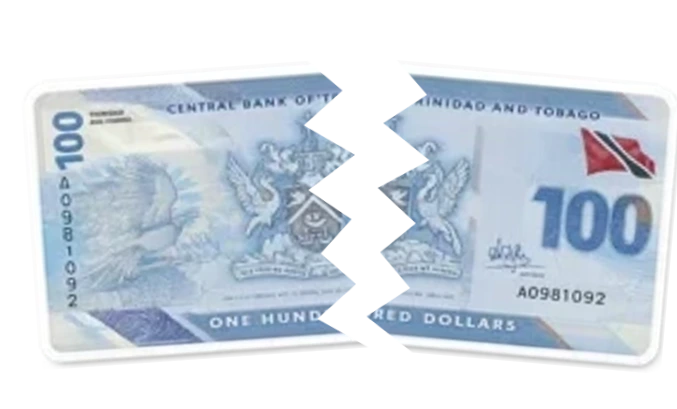
A market vendor in Curepe who needs US dollars can get them at two prices. The bank sells at TT$6.78, the rate the Central Bank of Trinidad and Tobago has held since 2017. The street sells at TT$8 to TT$10. The first price comes with an application, a queue that can run four weeks, and a real chance of being refused. The second price is available this afternoon.
Trinidad and Tobago imports nearly everything it consumes: food, medicine, electronics, auto parts. The US dollar is the working currency of that dependence, which makes the gap between those two prices a daily fact of life for a nurse in San Fernando or a small contractor in Debe. In 2025 the street premium reached 48% over the official rate.
Two prices for one dollar
The official arrangement is a managed float that behaves like a peg. The central bank distributes US dollars to commercial banks on quota formulas, the banks ration them onward, and citizens and businesses queue. The IMF has criticized the setup directly, calling it a subsidy on the currency that generates more demand than the supply can ever meet. Economists describe the result as a dual exchange rate system: one rate for people with institutional standing, another for everyone else.
The gap has widened for reasons that have little to do with policy preference. Oil and gas generate roughly 80% of the country’s foreign exchange earnings. Crude production has fallen 35% since 2005, natural gas output fell 34% between 2015 and 2024, and one consultancy cited in coverage of the energy transition estimated about ten years of gas reserves at current production. Fewer dollars come in each year while an import-dependent economy keeps asking for the same amount. The chart above is what that arithmetic looks like from the ground.
How the rationing works
Rationing sounds abstract until you see the instruments. Republic Bank, Royal Bank of Canada, Scotiabank, and CIBC have all cut the US-dollar limits on their credit cards, in some cases halving them. Allocation requests from businesses sit in queues for weeks. In a 2025 survey by the Trinidad and Tobago Chamber of Industry and Commerce, 62.2% of businesses reported being unable to pay foreign suppliers on time because of forex delays, 59.5% reported declining profitability, and nearly one in five said they were considering relocating to a country with a more functional financial system.
Faced with a four-week wait for a $2,000 allocation, a business owner buys on the parallel market and absorbs the premium, or shrinks the order, or closes. Much of the economy now clears at the street rate.
A country that runs on cash
The people hit hardest by the premium are the ones with the least access to the official rate, and the survey data shows how many of them there are. A 2023 national financial inclusion study found that 25% of the adult population lacks access to a basic transaction account. That is roughly 340,000 adults in a country of 1.4 million, and the share has been rising: World Bank data puts the banked share of adults at 81% in 2017 and about 74.6% in 2024.
Among the unbanked, 41% say they lack sufficient funds to open and keep an account, 13% cite documentation requirements, and 33% say they simply see no need for one. That last number describes a preference, and the rest of the data backs it up.
Cash carries 63% of all transactions nationwide, including among people who hold debit cards. Of adults who save, 82% keep the money at home. Among micro, small, and medium businesses, 77% have no dedicated business bank account and 86% do not accept digital payments. The informal economy is estimated at 26% to 33% of GDP. Meanwhile the official route to US dollars runs through instruments most of this population does not hold: an account, a credit card, a documented history. For them, the only dollar on offer is the street dollar, at the street price.
What happened in Caracas and Buenos Aires
This combination of a defended official rate, a thriving parallel market, and a cash-preferring population has appeared before, and in each case the market found its own answer in stablecoins. Venezuela is the starkest case. With inflation above 229% and the bolívar failing in daily trade, supermarkets began quoting prices in dollars and settling in USDT at the day’s parallel rate. By 2025, stablecoins carried an estimated 47% of transactions under $10,000 in the country, teachers received part of their salaries in USDT, and about 9% of Venezuela’s $5.4 billion in annual remittances arrived over crypto rails. USDT on the Tron network won because transfer fees were minimal and the distribution was peer to peer. No bank was involved at any step.
Argentina in 2022 is the closer analogue: a country with real banking infrastructure but currency controls that kept ordinary people from buying dollars at a fair price. During the peso crisis, the USDT premium over the official rate reached 116%. Informal storefronts where people exchanged pesos for stablecoins, the crypto caves, spread through Buenos Aires. Around 65% of stablecoin transactions used USDT and 25% USDC, and the dominant use was wage protection rather than speculation.
The Argentine episode also showed where adoption stops. The caves worked for anyone who could walk in with pesos, but the on-ramp still assumed a smartphone, digital literacy, and comfort with an informal counterparty. For people holding only cash, the missing piece was physical: a window where someone hands over local currency and walks away holding dollars on a phone. Every Latin American market that developed a real stablecoin economy did it by meeting people at the cash layer.
The window
Trinidad and Tobago has one advantage Argentina and Venezuela never had: time. Its crisis is structural and slow, backed by foreign reserves of $5.29 billion as of April 2025 and a sovereign fund holding another $6.09 billion. The country also moved on regulation before the informal market hardened. The Virtual Assets and Virtual Asset Service Providers Act received presidential assent on December 23, 2025, making the TTSEC the lead regulator for virtual asset businesses. Personal ownership and use of crypto is explicitly legal under the Act. Commercial operators need TTSEC authorization or admission to the regulatory sandbox, and full authorizations open after December 31, 2026. The TTSEC began certifying its first nine virtual asset service providers in May 2026.
In Venezuela the stablecoin economy grew without law. In Argentina it grew against it, and supervision arrived years later. Trinidad and Tobago has written the rulebook first and left a sandbox open during the buildout. Operators who engage it now get to construct the access layer inside the rules rather than ahead of them.
The dollars exist. The pathway does not.
The arithmetic of access
Set the four ways a Trinidadian can currently reach dollar value side by side and the case makes itself.
| Access method | Cost over official rate | Bank account? | Speed |
|---|---|---|---|
| Bank, official rate | 0% | Yes, plus credit history | 2–4 weeks |
| Street / parallel USD | 18–48% | No | Immediate |
| Cash-to-stablecoin kiosk | ~5–10% fee | No | Immediate |
| P2P crypto exchange | 5–20% | No, but digital KYC | Hours |
A kiosk or teller that converts TT dollars to USDC for a transparent fee cannot compete with the official bank rate, and it does not need to. The relevant comparison is the street rate, because that is the only rate actually available to someone without an account. Against a 40% premium, a 5% to 10% conversion fee for a one-to-one dollar asset, delivered instantly into a self-custody wallet, is a better deal by a wide margin. The requirements list is short: a phone for the wallet, a TT dollar bill, and a machine that works.
Remittances sharpen the case further. The country received about $199 million in remittances in 2024, 57.7% of it from the United States, where the diaspora numbers roughly 253,000 people. At the global average cost of 6.62%, a $500 transfer loses $33 in fees before the recipient even faces the conversion problem on arrival. A dollar that arrives as a stablecoin skips the transfer fee, and the recipient can hold it as dollars instead of converting into a currency under pressure.
Who walks in first
The early users of a cash-to-stablecoin window in Trinidad and Tobago are easy to picture, because the surveys already describe them. The vendor who buys imported stock and has no path to bank forex. The MSME owner among the 62.2% who cannot pay a supplier on time. The gig worker paid by a foreign platform who wants to keep earnings in dollars. The household among the 82% saving at home, in a currency slowly losing purchasing power against everything it imports. Together these groups form most of the country’s working population.
Trinidad and Tobago’s forex crisis is an access problem. The dollars exist: in the sovereign fund, in energy revenues, in the wallets of relatives in New York and Miami. What does not exist is a way for an ordinary person holding TT dollars in cash to reach dollar value without a bank’s permission or a black-market premium. The parallel market has already established what people will pay for that access. The open question is who builds the better door, and under whose rules. That question now has a deadline attached: the sandbox is open, and the first licenses are being written.
Sources: TTIFC National Financial Inclusion Survey 2023 (with UNCDF/UNDP); T&T Ministry of Finance Financial Inclusion Survey launch 2024; World Bank Global Findex; Trinidad and Tobago Chamber of Industry and Commerce 2025 business survey; IMF Article IV commentary on the exchange regime; The Guardian’s reporting on T&T’s energy transition; the Virtual Assets and VASP Act 2025 and TTSEC sandbox notices; CNBC and Chainalysis reporting on Venezuela’s USDT adoption; CoinMarketCap documentation of Argentina’s 2022 crypto caves; IDB Remittances Report 2024; World Bank Remittance Prices Worldwide Q3 2024.